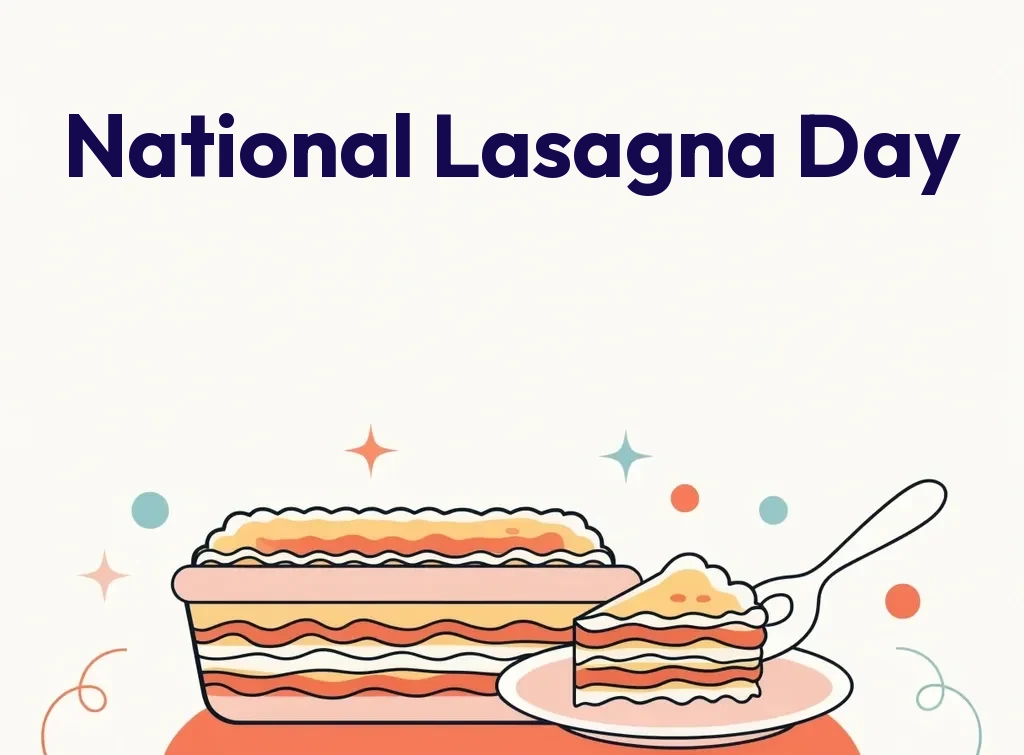
National Lasagna Day falls every July 29 and celebrates the hearty layered pasta that feeds a crowd. Sheets of pasta stacked with sauce and cheese bake into one of the most comforting dishes around. Here’s where the word lasagna came from and why Britain once claimed to invent it, plus how Bologna makes its official version.
Quick Facts About National Lasagna Day
| Observed on | July 29, every year |
|---|---|
| Next occurrence | Thursday, July 29, 2027 |
| Country | United States |
| Type | Food day |
| Founded by | Not documented |
| Word origin | Greek lasanon, a cooking pot |
| Bologna’s official recipe | Registered 2003 |
When Is National Lasagna Day in 2027?
Bake a pan on Thursday, July 29, 2027, though you might want to run the oven early in the day to keep the kitchen cool.
Many Italian restaurants feature lasagna specials that week, and some offer family-size pans for takeout.
The creator of this observance is unknown. It’s a popular pick for potlucks and family dinners, since one pan can easily feed eight people.
What Is National Lasagna Day and Why Is It Observed?
This pasta day celebrates a dish that has become a symbol of home cooking and generosity in families across the country.
Lasagna is the meal people bring to new parents and grieving neighbors. It’s easy to make ahead and freezes well, which makes it ideal for sharing when someone needs a helping hand.
The dish also has endless variations. Some cooks use a slow meat ragù. Others prefer a vegetarian version with spinach.
Italian regions take great pride in their local versions. Bologna even registered an official recipe to protect its classic from imitations.
History and Origins of National Lasagna Day
Named After a Pot
Lasagna comes from the Greek lasanon, which meant a pot with feet or a trivet, Etymonline explains. It passed through Latin as lasanum, meaning a cooking pot, before Italian cooks used it for the pasta itself.
Today’s Italian spelling shows up in dictionaries by the 1590s.
A British Claim
A British newspaper once claimed that England invented lasagna. It pointed to a dish called loseyns in a cookbook written for King Richard II around 1390.
Language columnist Dot Wordsworth of The Spectator was skeptical. She noted that a 14th-century cookbook from Naples already described sheets of pasta layered with cheese and spices.
Bologna’s Official Recipe
That same year, the Italian Academy of Cuisine certified a classic recipe for lasagne verdi alla bolognese. Bologna’s version layers green spinach pasta with meat ragù and béchamel at least six times.
How Is National Lasagna Day Celebrated?
Families bake a big pan of lasagna for Sunday dinner and invite grandparents and cousins to the table.
Friends deliver lasagna to neighbors who just had a baby or are going through a hard time.
Home cooks try making fresh pasta sheets from scratch instead of using boxed noodles from the store.
Restaurants serve creative versions with butternut squash alongside the classic meat sauce.
Some people host lasagna cook-offs where guests vote on the best family recipe of the night.
Others freeze extra portions so they can enjoy quick, homemade dinners on busy weeknights.
How to Celebrate National Lasagna Day
- Drain the ricotta. Let wet cheese sit in a strainer for a while to avoid a soggy lasagna.
- Don’t overcook noodles. Boil fresh or dried sheets briefly, since they keep softening in the oven.
- Build even layers. Spread sauce to the edges so the corners don’t dry out while baking.
- Let it rest. Wait at least 15 minutes after baking so slices hold together when cut.
- Try Bologna’s way. Use béchamel and ragù with Parmigiano instead of ricotta for a richer texture.
- Chill leftovers quickly. Refrigerate within 2 hours and reheat until the center is steaming.
Interesting Facts About National Lasagna Day
- In English, lasagna first appeared in the late 1300s as loseyne, describing a dish of cheese and noodles.
- Lasagne with an e is the Italian plural, while lasagna is common in American English.
- Bologna’s official recipe was registered with the city’s Chamber of Commerce in July 2003.
- That recipe calls for grating Parmigiano Reggiano at the last moment for the best flavor.
- Some linguists think loseyns may share roots with the English word lozenge.
- Leftover lasagna keeps about 3 to 4 months in the freezer.
Frequently Asked Questions About National Lasagna Day
Is it lasagna or lasagne?
Both are correct. Lasagne is the Italian plural for the pasta sheets, while lasagna is the common American spelling for the finished dish.
Did Britain really invent lasagna?
Probably not. A medieval English recipe used a similar word, but a cookbook from Naples from the same century already described layered pasta.
What makes Bologna’s lasagna different?
It skips ricotta and relies on béchamel for creaminess. Cooks color the pasta green with spinach and stack it at least six layers high.
Why is my lasagna watery?
Wet ricotta is a common cause, and so are vegetables that release liquid. Drain ingredients well and let the lasagna rest before slicing.
Can I freeze lasagna?
Yes. Cover the pan well with foil and freeze it for up to a few months. Thaw it overnight in the fridge before baking.
Should I use no-boil noodles?
They work well and save time. Add a little extra sauce so they soften properly. Keep the pan covered with foil for most of the baking time.
Sources and Further Reading
- Etymonline – Lasagna
- The Spectator – Mind your language (26 July 2003)
- Bologna Welcome – Lasagne verdi alla bolognese
- USDA FSIS – Leftovers and food safety