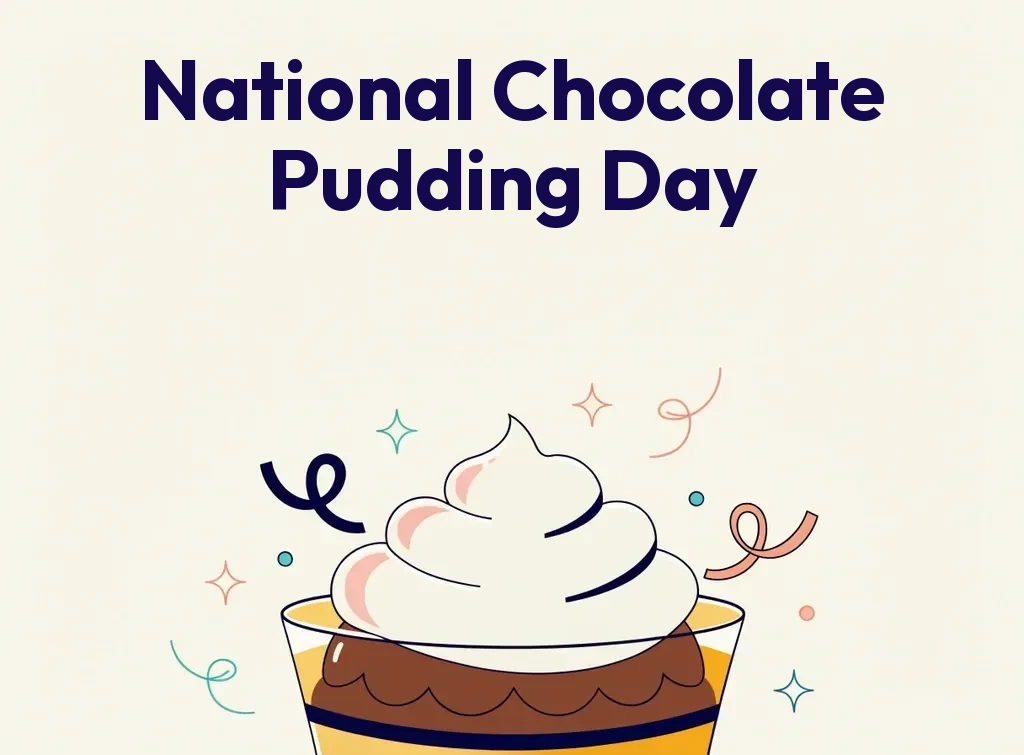
National Chocolate Pudding Day falls every June 26 and celebrates the smooth, creamy dessert that’s a lunchbox and diner favorite. Some like it warm from the pot, while others prefer it chilled with a cloud of whipped cream. Here’s how pudding went from a meat dish to a chocolate treat, plus tips for making it from scratch.
Quick Facts About National Chocolate Pudding Day
| Observed on | June 26, every year |
|---|---|
| Next occurrence | Saturday, June 26, 2027 |
| Country | United States |
| Type | Dessert day |
| Founded by | Not documented |
| Earliest cited recipe | 1730, The Complete Practical Cook |
| Main thickener today | Cornstarch |
When Is National Chocolate Pudding Day in 2027?
Grab a spoon on Saturday, June 26, 2027, when a chilled bowl of pudding makes an easy dessert for a warm summer night.
No official group sponsors the day, so anyone can celebrate with a homemade batch or a store-bought cup.
Home cooks often use the date to make pudding from scratch and compare it with store-bought cups.
It also falls at the start of summer break. Kids are home then and often looking for simple kitchen projects.
What Is National Chocolate Pudding Day and Why Is It Observed?
This dessert day celebrates one of the easiest homemade treats. Chocolate pudding needs only a few pantry staples and a little patience at the stove.
It also carries plenty of nostalgia, from childhood snack cups to a grandparent’s stovetop version.
Its smooth texture comes from starch, which thickens the milk as it heats and sets the pudding as it cools.
Many families serve it as a dessert, while others use it to fill pies or layer trifles.
Making it from scratch shows just how much richer a homemade batch can taste.
Some cooks add a pinch of espresso powder or cinnamon to deepen the chocolate flavor.
History and Origins of National Chocolate Pudding Day
This creamy holiday has no recorded founder.
Pudding Started as a Sausage
Food historians link the word pudding to the Latin botellus, meaning sausage, The Food Timeline explains. Early puddings were often made of meat or blood stuffed into animal casings.
Around the early 1600s, cooks began boiling puddings in cloth bags. That opened the door to sweet versions made with fruit and spices. By the late 1700s, most English puddings no longer contained meat.
The First Chocolate Puddings
The earliest printed chocolate pudding recipe cited by The Food Timeline dates to 1730. It appeared in Charles Carter’s The Complete Practical Cook and combined cream and eggs with grated chocolate and spices.
Cornstarch Changes Everything
Cornstarch was widely available by the 1850s, The Nibble notes. Starch-thickened puddings were seen as easy to digest. In the late 1800s, they were promoted as good food for children and people who were ill.
By the 1930s, boxed pudding mixes were common in American stores. In 1936, chocolate joined the Jell-O lineup as a pudding made with milk, What’s Cooking America notes.
Pudding vs. Custard and Mousse
American pudding is thickened mainly with starch such as cornstarch. Eggs are optional. Custard gets its body mainly from eggs instead.
Mousse gets its airy texture from whipped cream or beaten egg whites rather than starch. In Britain, pudding often just means dessert in general.
How Is National Chocolate Pudding Day Celebrated?
Families make stovetop pudding together, taking turns stirring the pot until it thickens.
Kids build pudding cups layered with crushed cookies and gummy worms for a playful dirt dessert that looks like a garden.
Bakers spoon chocolate pudding into a cookie crust and top it with whipped cream for an easy pie.
Diners and cafeterias bring back old-fashioned pudding cups topped with a generous dollop of fresh cream.
Some cooks try a vegan version made with oat or almond milk and rich dark cocoa.
Friends set up a pudding bar with toppings like fresh berries or shaved chocolate.
How to Celebrate National Chocolate Pudding Day
- Whisk out lumps first. Mix cornstarch with sugar and cocoa before adding milk so no clumps form.
- Stir constantly. Keep the pot moving over medium heat so the bottom doesn’t scorch.
- Use real chocolate. Stir in chopped dark chocolate at the end for a richer, silkier finish.
- Prevent a skin. Press plastic wrap right onto the surface while the pudding cools.
- Chill it well. Refrigerate for at least two hours so the pudding sets firm and cold.
- Dress it up. Top servings with whipped cream, crushed cookies or a few fresh raspberries.
Interesting Facts About National Chocolate Pudding Day
- Jell-O launched ready-to-eat pudding cups called Pudding Treats in 1971.
- Early English puddings were often boiled in cloth bags hung in big kettles.
- Black pudding, a blood sausage, still keeps the dish’s original meaning alive in Britain.
- Chocolate pudding pie is a classic diner dessert across the American Midwest.
- Instant pudding sets with cold milk and no cooking at all.
- Starch-thickened puddings were once a common food for people recovering from illness.
Frequently Asked Questions About National Chocolate Pudding Day
Why does pudding get a skin on top?
As pudding cools, its surface dries out. Proteins in the milk then form a film. Pressing plastic wrap directly onto the pudding prevents it. Some people actually love the skin.
Why is my homemade pudding runny?
It probably didn’t cook long enough to activate the starch. Bring it to a gentle boil and let it bubble for a minute before cooling. Stirring too hard after chilling can also thin it.
What’s the difference between pudding and mousse?
Pudding is thickened with starch and has a dense, spoonable texture. Mousse is lighter because air is folded in through whipping. It’s usually served chilled in small portions.
Can I make chocolate pudding without eggs?
Yes. Most American cornstarch puddings don’t need eggs at all. Egg yolks add richness, but cornstarch alone will set the pudding nicely. That makes it a good choice for kids with egg allergies.
How long does homemade pudding last?
Covered in the fridge, it keeps for several days. Stir it gently before serving if it has firmed up too much.
Sources and Further Reading
- The Food Timeline – Puddings
- The Nibble – National Chocolate Pudding Day
- What’s Cooking America – History of gelatin and Jell-O