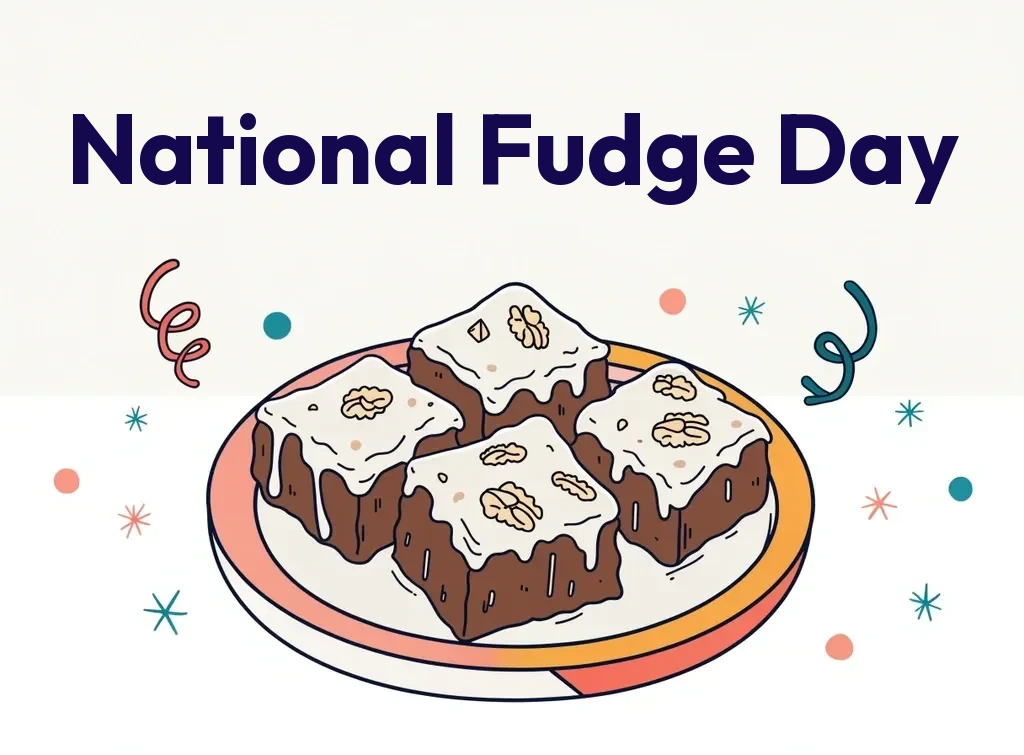
National Fudge Day falls every June 16 and celebrates the rich, creamy candy made by cooking sugar with butter and milk. Chocolate is the most popular flavor by far. It’s easy to make at home and just as easy to find at candy shops in tourist towns. Here’s how fudge became a craze at women’s colleges, plus tips for a smooth batch.
Quick Facts About National Fudge Day
| Observed on | June 16, every year |
|---|---|
| Next occurrence | Wednesday, June 16, 2027 |
| Country | United States |
| Type | Candy day |
| Founded by | Not documented |
| Early fame | Vassar College, 1888 |
| Key to smooth fudge | Small sugar crystals |
When Is National Fudge Day in 2027?
Stir up a batch on Wednesday, June 16, 2027, a fitting time since many seaside and lakeside towns are starting their busy fudge-shop season.
No official group sponsors the day, so anyone can celebrate with a homemade pan or a slab from a local candy maker.
A box of homemade fudge also makes a thoughtful summer hostess gift for cookouts and lake weekends at the cabin.
Some candy shops offer free samples or flavor specials around the date.
What Is National Fudge Day and Why Is It Observed?
This candy day honors a treat that almost anyone can make with just a heavy pot and a little patience.
Good fudge is all about controlling the size of the sugar crystals that form as the hot syrup cools. Small crystals give it a smooth, creamy texture, while large ones make it grainy.
It’s also a classic souvenir. Candy shops in tourist towns often make it in big copper kettles and cool it on marble slabs where visitors can watch.
It plays a big role in holiday gift-giving too, especially in tins mailed to faraway relatives.
Quick versions made with sweetened condensed milk let beginners skip the candy thermometer altogether.
Flavors now range far beyond chocolate, from peanut butter to maple walnut.
History and Origins of National Fudge Day
Nobody has claimed this candy day as their own creation.
A Mysterious Start
Fudge is an American candy from the late nineteenth century, but its exact origins are unclear. A popular legend credits Emelyn Battersby Hartridge of Vassar College’s class of 1892, Atlas Obscura notes.
In a 1921 letter, Hartridge described a schoolmate’s cousin in Baltimore who made fudge. That cousin sold it in 1886 for 40 cents a pound, CooksInfo reports.
Hartridge got the recipe and made 30 pounds of fudge for Vassar’s Senior Auction in 1888. Her letter is the first documented mention of the candy, the Vassar Quarterly notes.
A College Craze
From Vassar, the fudge habit quickly spread to other women’s colleges across the Northeast in the years that followed. Wellesley students added marshmallows, while Smith College cooks used molasses.
For a while, it was even known as Vassar chocolates. Some college administrators worried that late-night fudge parties would distract young women from their studies and their strict bedtimes.
By 1895, newspapers around the country were printing recipes and stories about Vassar fudge.
How Is National Fudge Day Celebrated?
Candy shops on Mackinac Island and in other resort towns hand out samples while making fudge in front of visitors.
Home cooks try the old-fashioned stovetop method with a candy thermometer clipped to the pot.
Families make no-fail fudge in the microwave with chocolate chips and sweetened condensed milk.
Bakers experiment with swirls of peanut butter or marshmallow, a nod to the old Wellesley version.
Friends trade squares of different flavors at parties to see which one becomes the new family favorite.
Some people wrap squares in wax paper and tuck them into lunchboxes as a surprise.
How to Celebrate National Fudge Day
- Use a candy thermometer. Cook classic fudge to the soft-ball stage, around 234 to 237°F, for the right texture.
- Don’t stir while it boils. Stirring too soon can start large sugar crystals that make fudge grainy.
- Cool before beating. Let the mixture cool to lukewarm, then beat it until it loses its shine.
- Line the pan. Use parchment or foil so you can lift out the fudge and cut neat squares.
- Try a shortcut. Melt chocolate chips with sweetened condensed milk for an easy, foolproof batch.
- Store it right. Wrap fudge tightly and keep it at room temperature or in the freezer.
Interesting Facts About National Fudge Day
- Fudge won’t melt in summer heat the way chocolate does, though it can soften.
- The refrigerator tends to dry fudge out, so cool room-temperature storage works better.
- Early college fudge was often cooked over gas lamps in dorm rooms.
- Mackinac Island visitors are nicknamed fudgies by locals.
- The word fudge was used to mean faking or fumbling something long before the candy existed.
- Corn syrup in modern recipes helps prevent the grainy crystals that ruin a batch.
Frequently Asked Questions About National Fudge Day
Why is my fudge grainy?
Large sugar crystals formed during cooking or cooling. Avoid stirring while the syrup boils. Let it cool before beating. Wiping sugar from the pan’s sides also helps keep the texture smooth.
Why won’t my fudge set?
It probably didn’t cook long enough. Fudge needs to reach the soft-ball stage to firm up. Humid weather can also keep it soft, so try making it on a dry day.
Who really invented fudge?
Nobody knows for sure. The first documented mention comes from a Vassar student’s letter describing a Baltimore batch. Vassar students then turned it into a college craze soon afterward.
How should I store homemade fudge?
Wrap it tightly in wax paper and plastic wrap. It stays fresh on the counter for up to two weeks. Freeze it for longer storage.
What makes Mackinac Island fudge famous?
Shops there have made fudge for generations, often working the hot candy on marble slabs in their front windows. The island’s many fudge shops draw summer visitors from across the Midwest.