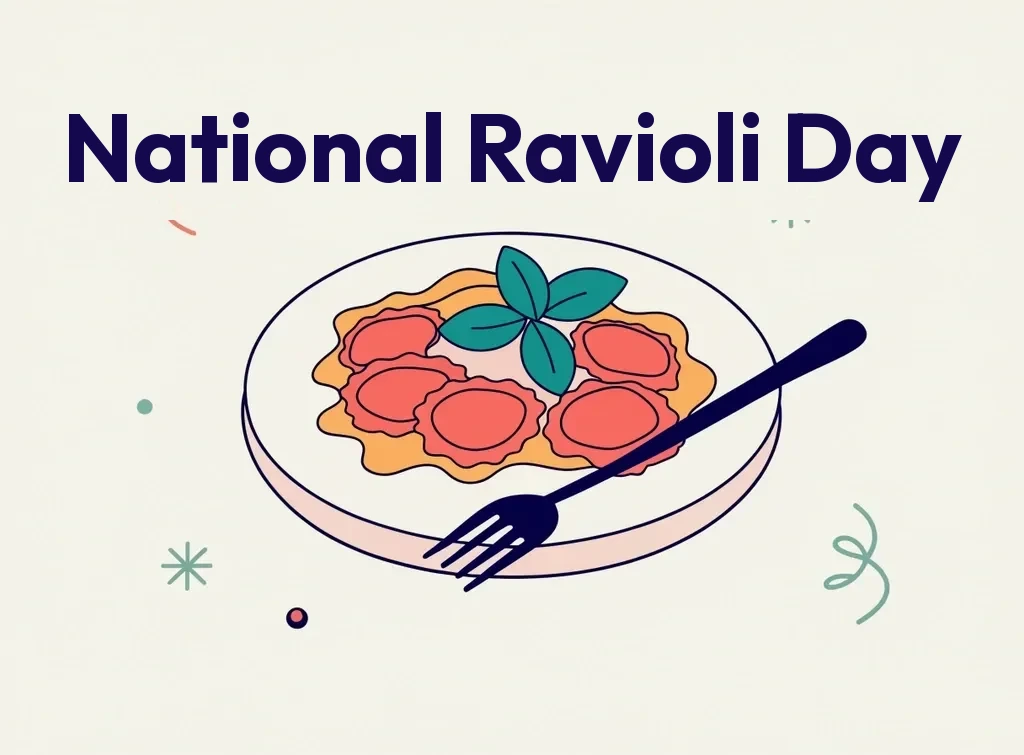
National Ravioli Day falls every March 20 and celebrates the little pasta pillows stuffed with cheese or meat. Whether you like them fresh or frozen, there’s a version for every kitchen. Its exact origins are lost. Read on for the word’s surprising meaning, the St. Louis fight over toasted ravioli and the real chef behind the canned version.
Quick Facts About National Ravioli Day
| Observed on | March 20, every year |
|---|---|
| Next occurrence | Saturday, March 20, 2027 |
| Country | United States |
| Type | Informal food day |
| Founded by | Not documented |
| Word first used in English | 1760 |
| Toasted ravioli hometown | St. Louis, Missouri |
When Is National Ravioli Day in 2027?
Boil a pot on Saturday, March 20, 2027. It never shifts from March 20.
It’s a casual food holiday rather than an official one. Italian restaurants sometimes feature special ravioli, and pasta shops may offer seasonal fillings like butternut squash or mushroom.
In St. Louis, the day carries extra weight. Toasted ravioli is a local icon there, served as an appetizer at restaurants across the city and even at the ballpark.
What Is National Ravioli Day and Why Is It Observed?
The day celebrates a dish that has traveled far. Ravioli moved from Italian family kitchens to St. Louis fryers and then onto pantry shelves in cans.
Merriam-Webster defines ravioli as little cases of pasta dough with a savory filling like meat or cheese. It dates the word’s first known use in English to 1760.
Making ravioli by hand is a classic family project. Many Italian-American households still gather to roll dough and fill hundreds of pieces before a holiday.
It’s also an excuse to sample a style you’ve never had. That might be a St. Louis appetizer or a homemade batch with brown butter.
History and Origins of National Ravioli Day
No one knows exactly when people started marking it.
Pasta Pillows Through the Ages
Stuffed pasta has a long history in Italy, where nearly every region has its own shape. Ravioli are among the best known, and recipes for filled pasta appear in Italian cookbooks going back centuries.
Italian immigrants brought ravioli to American cities in the late 1800s and early 1900s. Family ravioli-making days became a tradition in many Italian-American homes.
Who Invented Toasted Ravioli?
Two St. Louis restaurants on The Hill, the city’s Italian neighborhood, both claim it, St. Louis Magazine reports. Both stories date to the 1940s and involve a cook dropping ravioli into hot oil by mistake.
At Oldani’s, now Mama’s, Mickey Garagiola said he was there the night it happened. Angelo’s, now Charlie Gitto’s, tells a similar tale. Lou Oldani called them “toasted” because “fat fried” didn’t sound appealing.
The Real Chef Boyardee
Ettore Boiardi was born in 1897 in Piacenza, Italy. He later became head chef at New York’s Plaza Hotel. In 1924, he opened Il Giardino d’Italia in Cleveland.
He and his brother began jarring the restaurant’s sauces in 1927 because customers kept asking for them. Around 1938, the brand became “Chef Boyardee” so shoppers could pronounce it, The Takeout notes.
How Is National Ravioli Day Celebrated?
Many people toss cheese ravioli in brown butter with crispy sage leaves, a simple dish that tastes restaurant-worthy.
St. Louis fans make toasted ravioli at home by breading frozen meat ravioli and frying them until golden. A dusting of Parmesan and a cup of marinara finish the dish.
Ambitious cooks roll their own dough, aiming for sheets so thin you can almost see your hand through them.
Busy families bake a ravioli lasagna by layering frozen ravioli with sauce and mozzarella, which skips the boiling step entirely.
Some Italian-American families hold a ravioli-making party, with one person rolling dough while others fill and seal each piece.
How to Celebrate National Ravioli Day
- Make toasted ravioli. Bread frozen meat ravioli, fry them until golden and dust them with Parmesan, St. Louis style.
- Try brown butter and sage. Toss cheese ravioli in browned butter with crispy sage leaves and a squeeze of lemon.
- Use wonton wrappers. They’re a quick shortcut for homemade ravioli when you don’t want to roll pasta.
- Press out the air. Seal tightly around each mound of filling so the ravioli don’t burst while cooking.
- Cook gently. Simmer instead of hard-boiling, then lift the ravioli out with a slotted spoon.
Interesting Facts About National Ravioli Day
- Mickey Garagiola was the brother of baseball catcher and broadcaster Joe Garagiola, also from The Hill.
- St. Louis restaurants often shorten toasted ravioli to “T-ravs” on their menus.
- Chef Boyardee’s company supplied rations to American troops during World War II.
- Many Italian regions have their own stuffed pasta, such as tortellini in Bologna and agnolotti in Piedmont.
- Square ravioli are often cut with a special stamp or a rolling cutter with a fluted edge.
Frequently Asked Questions About National Ravioli Day
What does “ravioli” mean?
It comes from an Italian dialect form meaning “little turnip,” from the Latin rapa, Merriam-Webster notes. One piece is called a raviolo. Most people use the plural even for one, though.
Do you thaw frozen ravioli before cooking?
No. Drop them straight into simmering water. Thawed ravioli turn sticky and can tear, so keep them frozen until the water is ready.
How do you know fresh ravioli are done?
Fresh ravioli usually float within a few minutes. Taste one at the edge, where the dough is thickest, to check that it’s tender. Frozen ones may need a minute or two longer.
What’s the best sauce for meat ravioli?
A simple tomato or meat sauce lets the filling shine. Cream sauces pair better with cheese or squash ravioli, which are milder in flavor. A simple brown butter works with almost any filling.
Can you air-fry toasted ravioli?
Yes. Bread them as usual, spray them lightly with oil and air-fry until crisp. They won’t be quite as rich as the fried version, but they come close.
Sources and Further Reading
- Merriam-Webster – Ravioli
- St. Louis Magazine – Who invented toasted ravioli?
- The Takeout – The Italian origins of Chef Boyardee