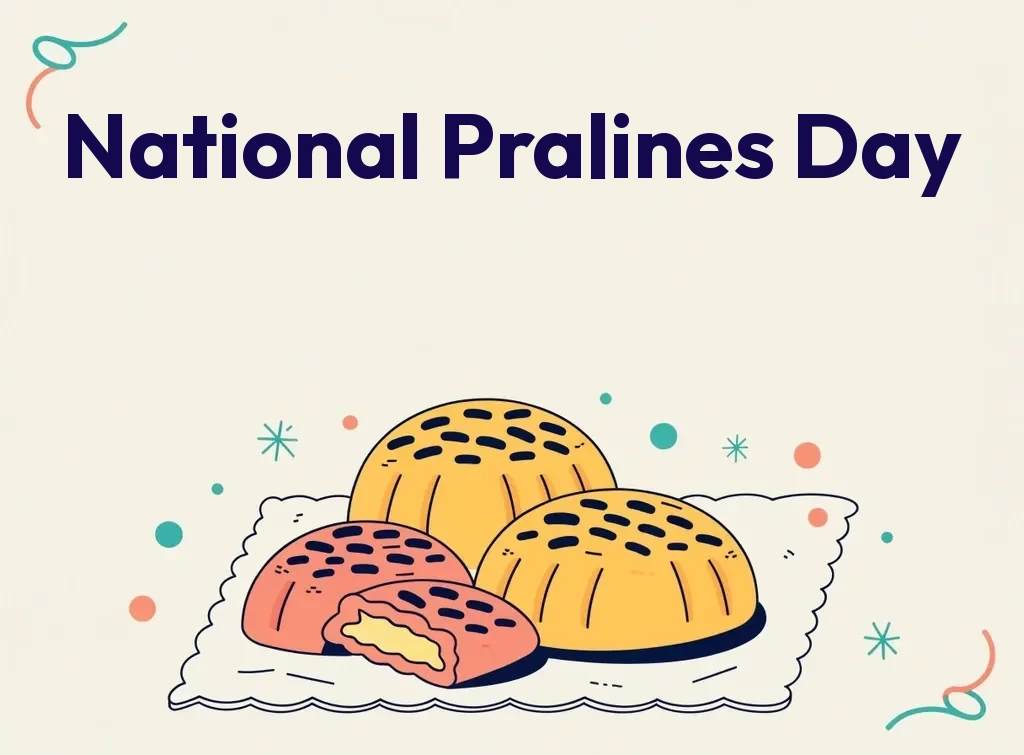
National Pralines Day falls every June 24 and celebrates the sweet, creamy pecan candy that’s a New Orleans signature. A good praline is made by cooking sugar with butter and cream before pecans are stirred in. It melts on the tongue in a way few candies do. Here’s how a French sugared almond became a Louisiana classic, plus tips for making your own.
Quick Facts About National Pralines Day
| Observed on | June 24, every year |
|---|---|
| Next occurrence | Thursday, June 24, 2027 |
| Country | United States |
| Type | Candy day |
| Founded by | Not documented |
| Signature city | New Orleans |
| Original French version | Almond in caramelized sugar |
When Is National Pralines Day in 2027?
Treat yourself on Thursday, June 24, 2027, a fitting time to visit candy shops in New Orleans or try a batch at home.
No official group sponsors the day, but candy makers across the South sometimes mark it with samples or specials.
Humid summer weather can make pralines tricky to set, so experienced cooks often wait for a dry afternoon.
Visitors to the French Quarter often pick up a box to bring home as a sweet souvenir.
What Is National Pralines Day and Why Is It Observed?
This candy day honors a treat that carries a slice of New Orleans history in every bite. The modern praline is softer and creamier than its French ancestor.
It also honors the women who built the candy’s reputation, often with little credit. For generations, Black women sold pralines on the city’s streets.
Pralines are a fun challenge for home cooks. Candy-making takes patience, so pralines reward cooks who watch the clock and the thermometer closely.
Today you’ll find flavors from classic vanilla to chocolate and bourbon, sold in shops across the South.
The candy’s pecan base also celebrates a nut native to the American South.
History and Origins of National Pralines Day
No one knows who first set aside a day for pralines.
A French Sugared Almond
The name is tied to a 17th-century French diplomat, the comte du Plessis-Praslin. His cook supposedly created the treat and named it for him, though 64 Parishes notes the story may be legend.
That first praline was a simple almond coated in caramelized sugar, a far cry from the soft candy sold in Louisiana today. Both ingredients were costly, so it was a treat for the wealthy.
The New Orleans Version
A popular tale says Ursuline nuns brought pralines to New Orleans in the 1720s. 64 Parishes calls that a fanciful bit of local mythmaking, since the earliest written mentions come from late 1800s newspapers.
In Louisiana, cooks swapped almonds for local pecans and added butter and cream. Saveur notes that enslaved cooks in colonial kitchens likely made these changes.
The Praline Ladies
Black women became the public face of the candy as it grew popular on the streets of New Orleans. Called pralinières, they sold pralines from baskets on New Orleans streets, Country Roads Magazine reports.
Free women of color sold them in the French Quarter before the Civil War. Many Black women carried on the trade after it.
Their work made them some of the city’s early women entrepreneurs. In 1918, a trade journal reported that a New Orleans firm had started making pralines commercially.
How Is National Pralines Day Celebrated?
Candy shops in the French Quarter hand out warm samples straight from the cooling sheets to visitors strolling past.
Home cooks try the old-fashioned stovetop method with a heavy pot and a candy thermometer.
Families crumble pralines over vanilla ice cream or bread pudding for a New Orleans-style dessert.
Bakers fold praline pieces into cookies and cheesecakes to add a sweet, nutty crunch to every slice.
Some people mail boxes of pralines to friends and relatives who miss the taste of Louisiana.
History fans read about the praline ladies and the role they played in the city’s food culture.
How to Celebrate National Pralines Day
- Use a candy thermometer. Cook the syrup to the soft-ball stage, about 236 to 240°F, for pralines that set properly.
- Toast the pecans. A few minutes in the oven deepens their flavor before they go into the candy.
- Work quickly. Spoon the mixture onto parchment as soon as it thickens, before it turns grainy in the pot.
- Pick a dry day. High humidity can keep pralines sticky, so avoid rainy afternoons.
- Store them airtight. Keep pralines in a sealed tin at room temperature to stay fresh for about a week.
- Buy from local makers. If you visit New Orleans, try pralines from several shops to compare styles.
Interesting Facts About National Pralines Day
- The candy’s name is often pronounced differently in New Orleans than in the rest of the South.
- European pralines are often made with almonds or hazelnuts and can mean a filled chocolate in Belgium.
- Pecans are the only major tree nut native to North America.
- Praline recipes were rarely written down, so many families passed them on by memory and practice.
- Creamy pralines get their soft texture from milk or cream, while French versions are hard and crunchy.
- Some shops now sell flavors like chocolate, rum and coconut alongside the classic vanilla.
Frequently Asked Questions About National Pralines Day
How do you pronounce praline?
In New Orleans, it’s usually PRAH-leen. Many other Southerners say PRAY-leen. Both are common, but locals often notice the difference right away. Either one will get you a praline at the counter.
Why are my pralines grainy?
Sugar crystals formed too early, often from stirring at the wrong time or cooking too long. Beat the mixture only until it starts to thicken, then spoon it out quickly.
What’s the difference between French and New Orleans pralines?
French pralines are almonds coated in hard caramelized sugar. New Orleans pralines use pecans cooked with butter and cream for a softer texture.
Who were the praline ladies?
They were Black women, many free women of color, who sold pralines on New Orleans streets in the 1800s and beyond. Their work made the candy famous across the city. Some shops today still honor their legacy.
How long do pralines last?
They keep well for several days in a sealed tin. Freezing works for longer storage. Humidity is their biggest enemy, so keep them away from steamy kitchens.
Sources and Further Reading
- 64 Parishes – Pralines
- Saveur – Pralines: How they cook ’em in New Orleans
- Country Roads Magazine – The praline ladies