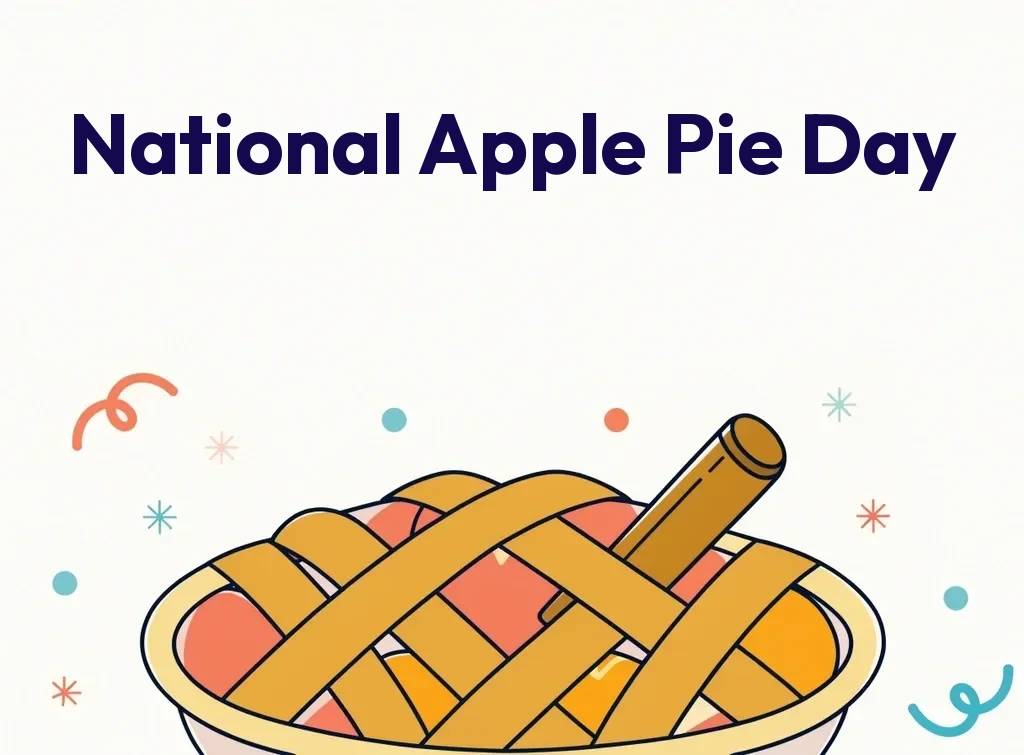
National Apple Pie Day falls every May 13 and celebrates a dessert so tied to the U.S. that it became a figure of speech. Yet apple pie’s roots go back to medieval England, and the apples themselves came from Asia. Some calendars list other apple pie dates too, so fans get more than one excuse a year. Here’s the pie’s surprising history, plus tips for a flaky, golden crust.
Quick Facts About National Apple Pie Day
| Observed on | May 13, every year |
|---|---|
| Next occurrence | Thursday, May 13, 2027 |
| Country | United States |
| Type | Food day |
| Founded by | Not documented |
| First recorded recipe | England, 1381 |
| Oldest American recipe | American Cookery, 1796 |
When Is National Apple Pie Day in 2027?
Bake a pie on Thursday, May 13, 2027. May 13 is one of the dates apple pie fans celebrate each year.
Some calendars also list apple pie days in the fall and winter, when fresh apples are at their peak. The May date gives bakers a reason to use stored apples or early varieties.
Bakeries and diners often feature apple pie specials that week, sometimes served warm with ice cream.
What Is National Apple Pie Day and Why Is It Observed?
This food day honors a dessert that stands for home and family gatherings in American culture. It also celebrates the orchards and farmers who grow the fruit.
Apple pie is endlessly flexible. Bakers add lattice tops or crumb toppings, and some serve slices with sharp cheddar. Most households guard their own favorite spice blend.
Behind the cozy image is a surprising story. The pie came from far away, and so did the apples, before both became American over time.
Apple pie also travels well, which is one reason it became a fixture at county fairs and church suppers across the country.
It’s also a good excuse to bake from scratch, or to support a local bakery that does it well.
History and Origins of National Apple Pie Day
Nobody has claimed this pie day as their creation, and its first year is unknown.
A Medieval English Pie
England produced the first recorded apple pie recipe in 1381, Smithsonian Magazine explains. Besides apples, it called for figs and raisins as well as pears and saffron. Early recipes had no sugar, and the crust, called a “coffin,” was a container rather than something to eat.
Apples Arrive in America
Apples are native to Asia, not North America. Colonists found only crab apples here and brought seeds and cuttings from England, VOA reports.
The oldest known American apple pie recipe appeared in Amelia Simmons’s 1796 book American Cookery, often called the first American cookbook.
Pie for Breakfast
Until the 19th century, Americans often ate apple pie at breakfast, the Christian Science Monitor notes. Pennsylvania Dutch settlers added many recipes, including the crumbly streusel topping.
“As American as Apple Pie”
The phrase is hard to trace. One early example is a 1924 newspaper ad for suits “as American as apple pie.” During World War II, soldiers told reporters they were fighting for “mom and apple pie.”
How Is National Apple Pie Day Celebrated?
Home bakers roll out double crusts and fill them with a mix of tart and sweet apples.
Diners serve warm slices topped with a scoop of vanilla ice cream, a combination often called pie à la mode.
New Englanders keep an old habit alive by pairing apple pie with a slice of sharp cheddar.
Families teach kids to make a lattice top, weaving strips of dough over the filling.
Orchards and farm stands sell pies made from their own apples, sometimes alongside fresh cider pressed on site the same week.
Bakers try twists like salted caramel apple pie or apple hand pies that are easy to eat on the go.
How to Celebrate National Apple Pie Day
- Mix your apples. Combine a tart variety like Granny Smith with a sweeter one like Honeycrisp for balanced flavor.
- Keep the dough cold. Chill the butter and the rolled crust so the pastry bakes up flaky instead of tough.
- Bake on a low rack. Place the pie near the bottom of the oven to help the bottom crust brown and crisp.
- Let it cool. Wait at least a couple of hours before slicing so the juices thicken and the filling holds.
- Try a crumb top. Swap the top crust for a buttery streusel in the Pennsylvania Dutch style.
- Visit an orchard. Buy pies or apples from a local farm to support growers near you.
Interesting Facts About National Apple Pie Day
- Medieval pie crusts were often too hard to eat and served mainly as sturdy baking dishes.
- The only apple native to North America is the small, sour crab apple, which colonists found disappointing.
- Amelia Simmons’s American Cookery, printed in 1796, included more than one recipe for apple pie.
- Pennsylvania Dutch bakers made crumb-topped Dutch apple pie a lasting favorite across the country.
- Cheddar on apple pie has long been a favorite pairing in Vermont and other parts of New England.
- Breakfast pie was common in early America, long before it became mostly an after-dinner treat.
Frequently Asked Questions About National Apple Pie Day
What are the best apples for pie?
Firm apples that hold their shape work best. Granny Smith adds tartness. Honeycrisp and Braeburn bring sweetness, and many bakers mix two or three kinds for depth.
How do I avoid a soggy bottom crust?
Bake the pie on a lower oven rack, ideally on a preheated baking sheet. Tossing the apples with a little flour or cornstarch also helps soak up extra juice.
What is Dutch apple pie?
It’s apple pie topped with a crumbly streusel made from butter and sugar mixed with flour instead of a second crust. The style is linked to Pennsylvania Dutch baking traditions.
Can you freeze apple pie?
Yes. Unbaked pies freeze well and bake from frozen if you add extra time. Baked pies can be frozen too, then reheated to crisp the crust.
Why do some people eat apple pie with cheese?
It’s an old New England and English tradition. The salty, sharp cheddar balances the sweet filling. Some bakers even fold shredded cheese into the crust.
Sources and Further Reading
- Smithsonian Magazine – Why is apple pie linked to America?
- Christian Science Monitor – Many ways to slice apple pie (2005)
- VOA – What’s so American about apple pie? (2014)